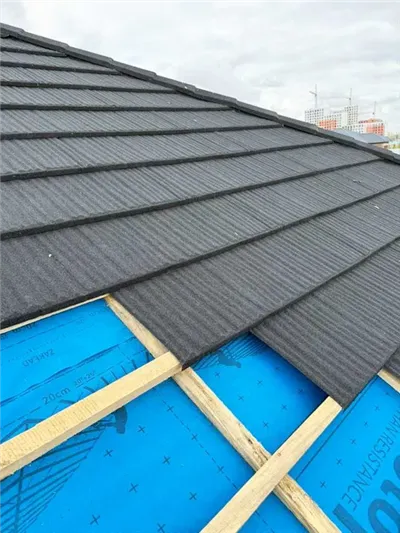
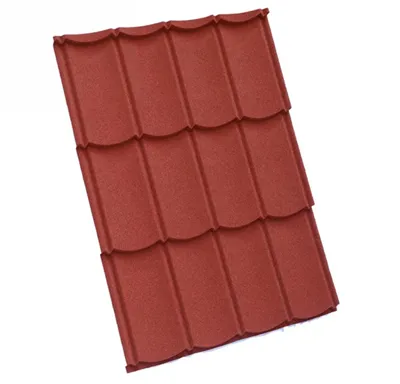
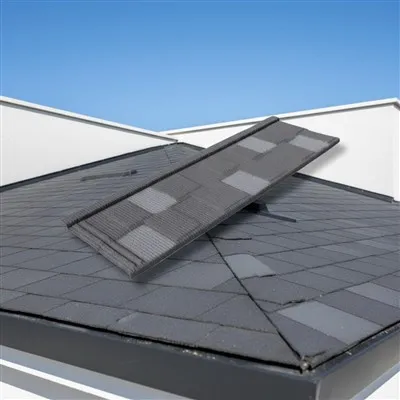
As a crucial component of building envelope, roofing tiles' technical characteristics not only determine the realization of basic roof functions but also profoundly influence the overall durability, safety, and adaptability of a building. Through long-term technological evolution, various types of tiles, due to differences in materials and molding processes, have developed unique performance advantages and application ranges, providing diverse solutions for different environments and building needs.
From a structural load-bearing perspective, roofing tiles generally emphasize a balance between lightweight and strength. New materials such as metal tiles and synthetic resin tiles, with their lower density, significantly reduce roof loads, which helps reduce the design pressure on the main structure, making them particularly suitable for light steel structures or renovations of existing buildings. While clay tiles and terracotta tiles are heavier, they possess higher compressive and flexural strength, maintaining stable shape under heavy loads or high wind pressure environments, demonstrating excellent mechanical reliability.
In terms of weather resistance, tiles need to withstand long-term ultraviolet radiation, temperature and humidity changes, rainfall erosion, and freeze-thaw cycles. Earthenware tiles and high-quality clay tiles are sintered at high temperatures, resulting in a dense structure and low water absorption, effectively preventing moisture intrusion and delaying frost damage. Cement tiles, through high-pressure molding and proper curing, achieve good impermeability and frost resistance. Asphalt shingles and synthetic resin tiles rely on the chemical corrosion resistance and flexibility of their polymer materials, exhibiting stable waterproofing and deformation adaptability in mild climates. Metal tiles, due to the inherent corrosion resistance of their base material and the ability to be coated, possess outstanding anti-aging and long-life characteristics.
Waterproofing and drainage performance are among the core technical elements of roof tiles. All types of tiles guide rainwater flow and prevent seepage through specific overlapping methods and locking edging structures. Traditional stacked tiles rely on overlapping layers and mortar fixation to form closed water channels; some metal tiles and new synthetic material tiles use concealed fasteners and continuous locking edging, making the roof outline more continuous and reducing seepage points. For different roof slopes, the tile design can flexibly adjust the overlap size and drainage path to ensure efficient drainage even under heavy rainfall conditions.
Convenience of construction and maintenance also reflects the technical characteristics. Uniformly shaped and sized roof tiles can be laid mechanically, improving efficiency and reducing human error. Lightweight tiles facilitate transportation and high-altitude operations, lowering construction difficulty and safety risks. Some materials can be replaced locally without damaging the overall structure, facilitating later maintenance and extending the roof's lifespan.
Furthermore, the optimization of the thermal and acoustic performance of roof tiles is receiving increasing attention. Adding an insulation layer to the bottom of the tile or incorporating heat-insulating fillers into the material can reduce heat gain in summer and heat loss in winter. Tiles with a certain thickness and surface texture can also play a role in noise reduction, improving the indoor acoustic environment.
In summary, the technical characteristics of roof tiles encompass multiple dimensions, including mechanical properties, weather resistance, waterproofing, ease of construction and maintenance, and environmental adaptability. These characteristics are interrelated and collectively determine the applicability of tiles in different climate zones, building types, and application scenarios. With advancements in materials science and manufacturing processes, tile technology is continuously developing towards higher durability, lower energy consumption, and better ecological benefits, providing a more solid guarantee for modern building engineering.